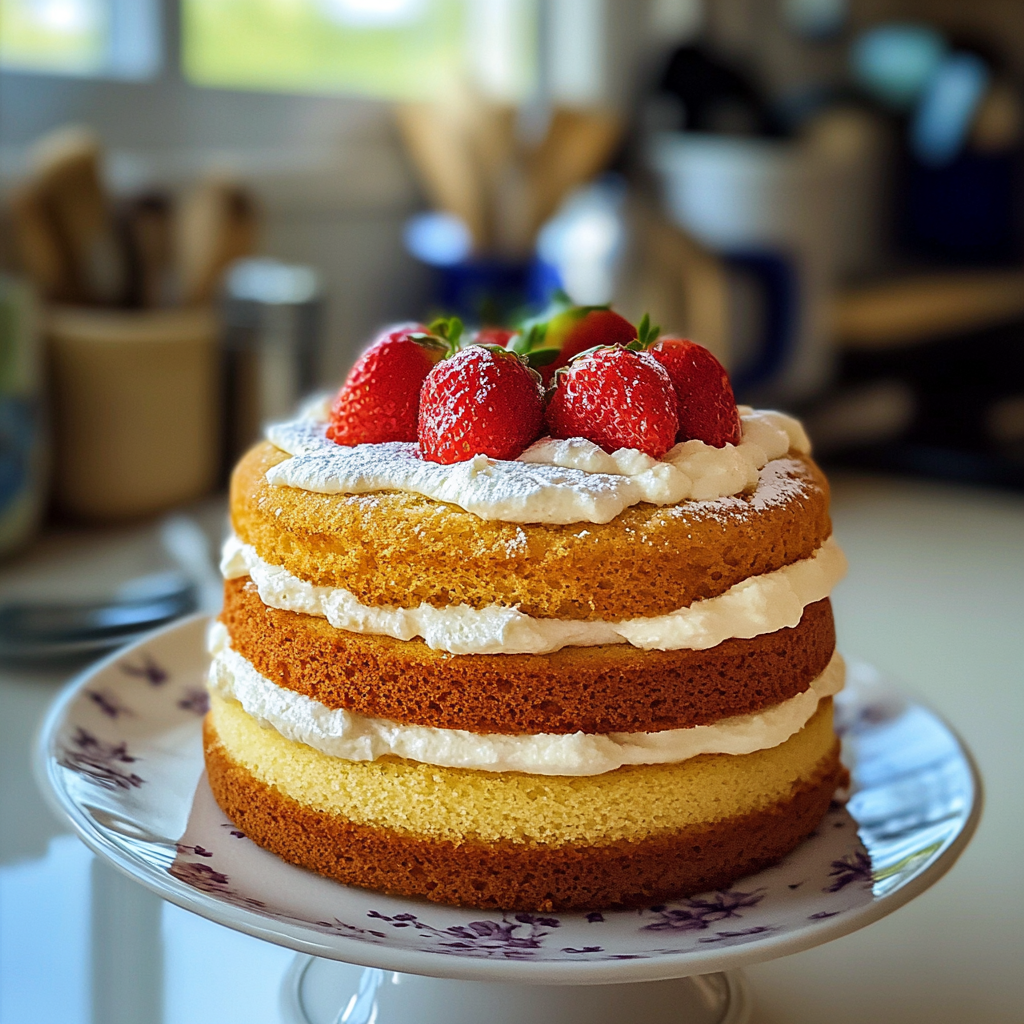

Have you ever tasted a dessert that perfectly balances softness and sweetness? The Victoria Sponge Cake does just that! This delightful treat boasts a light and airy texture enveloped in creamy frosting and fruit preserves. It’s not just a feast for the palate; its beautiful presentation makes it an appealing centerpiece for any gathering.
The history of this classic British dessert dates back to Queen Victoria’s era. Enjoying a slice with a cup of tea was one of her favorite pastimes. Whether you’re celebrating a birthday, hosting a tea party, or simply indulging in something special, this recipe will transport you back in time. With its simple ingredients and straightforward preparation, creating your own Victoria Sponge Cake at home is easier than you might think!
Why You’ll Love This Victoria Sponge Cake
- Quick and Easy: Minimal prep time and straightforward steps make this recipe stress-free, even for novice cooks
- Flavorful and Versatile: Enjoy outstanding flavor with ingredients you can easily customize by adding your favorites or adjusting spices
- Perfect for Any Occasion: Ideal for casual gatherings, holiday celebrations, or weeknight dinners

Ingredients for Victoria Sponge Cake
Here’s what you’ll need to make this delicious dish:
- Unsalted Butter: Use softened butter for easy creaming with sugar to create a light texture in the cake.
- Caster Sugar: This fine sugar dissolves quickly during mixing, resulting in a smooth batter.
- Large Eggs: Eggs should be at room temperature to help achieve maximum volume when whisked.
- Plain Flour: All-purpose flour works best; make sure to sift it to avoid lumps.
- Baking Powder: This leavening agent helps the cake rise beautifully while baking.
- Milk: Whole milk adds moisture and richness to the batter.
- Jam (Strawberry or Raspberry): Choose your favorite fruit jam to fill the layers; it adds flavor and moisture.
- Icing Sugar: Used for dusting on top before serving; it adds sweetness without overpowering the flavors.
The full ingredients list, including measurements, is provided in the recipe card directly below.
Une autre option délicieuse et facile à réaliser !
How to Make Victoria Sponge Cake
Follow these simple steps to prepare this delicious dish:
Step 1: Preheat Your Oven
Preheat your oven to 350°F (175°C). Grease two round cake pans with butter or nonstick spray and line them with parchment paper.
Step 2: Cream Butter and Sugar
In a mixing bowl, beat the softened unsalted butter and caster sugar together until light and fluffy. This should take about five minutes using an electric mixer.
Step 3: Add Eggs
Crack in the large eggs one at a time, beating well after each addition. Scrape down the sides of the bowl as necessary to ensure everything is combined.
Step 4: Mix Dry Ingredients
Sift together plain flour and baking powder into another bowl. Gradually fold this mixture into the wet ingredients using a spatula until just combined.
Step 5: Add Milk
Gently stir in the milk until you achieve a smooth batter. Be careful not to overmix; stop as soon as no dry flour remains.
Step 6: Bake the Cakes
Divide the batter evenly between the prepared pans. Bake in your preheated oven for about 25-30 minutes or until golden brown and a toothpick inserted into the center comes out clean.
Once baked, allow them to cool in their pans for about ten minutes before transferring them onto wire racks.
Transfer to plates and spread jam between layers before topping with whipped cream or icing sugar for the perfect finishing touch.

Tips and Tricks
Here are some helpful tips to ensure the best results for your dish:
- Room Temperature Ingredients: Ensure all ingredients are at room temperature before starting; this helps create an even batter.
- Check Oven Temperature: Use an oven thermometer if necessary; oven temperatures can vary significantly from what’s set.
- Cooling Time: Allow cakes to cool completely before frosting or serving; this prevents melting or sliding of toppings.
With these steps followed carefully, you’ll have an exquisite Victoria Sponge Cake ready to impress friends and family alike!
Essayez cette suggestion pour un repas convivial et savoureux !
How to Serve Victoria Sponge Cake
This Victoria Sponge Cake is versatile and pairs wonderfully with:
- Whipped Cream: A light and airy topping that enhances the cake’s sweetness and adds a creamy texture.
- Fresh Berries: The tartness of berries creates a delightful contrast, making each bite refreshing and flavorful.
- Icing Sugar Dusting: A simple dusting gives the cake an elegant finish while adding just a hint of sweetness.
Feel free to pair it with your favorite sides for a personalized meal!

Make Ahead and Storage
- Make Ahead: You can bake the Victoria Sponge Cake up to two days in advance. Allow it to cool completely, wrap it tightly in plastic wrap, and store it at room temperature.
- Storing: If you have leftovers, store the cake in an airtight container. It will remain fresh for about three days at room temperature or up to one week in the refrigerator.
- Reheating: To enjoy leftover cake, preheat your oven to 350°F (175°C). Place the slices on a baking sheet and warm them for about 5-10 minutes until just heated through without drying out.
Une autre recette parfaite pour varier vos repas !
Suggestions for Victoria Sponge Cake :
Avoid Overmixing the Batter
One of the most common mistakes when making a Victoria Sponge Cake is overmixing the batter. When you overmix, you incorporate too much air and develop gluten in the flour, which leads to a dense and chewy cake instead of a light and airy one. To avoid this, mix the ingredients just until they are combined. Use a spatula or wooden spoon for gentle folding rather than using an electric mixer after adding the flour. This method helps maintain that desirable fluffy texture that is characteristic of a perfect Victoria Sponge Cake.
Choose the Right Ingredients
The quality of your ingredients can make or break your Victoria Sponge Cake. Using fresh, high-quality eggs, butter, and flour is essential for achieving optimal flavor and texture. Opt for unsalted butter to control the salt content in your cake better. Also, consider using self-raising flour instead of all-purpose flour to give your cake that extra lift. Additionally, ensure that all ingredients are at room temperature before mixing; this helps create a uniform batter that bakes evenly.
Properly Measure Your Ingredients
Accurate measurement is critical when baking a Victoria Sponge Cake. Even small discrepancies in ingredient amounts can lead to significant differences in texture and flavor. Use a kitchen scale for precise measurements, especially for flour and sugar. Remember to spoon the flour into the measuring cup rather than scooping it directly from the bag, which can compact it and lead to excess amounts. This attention to detail ensures that your cake rises beautifully and has the right consistency.
Bake at the Correct Temperature
Baking your Victoria Sponge Cake at an incorrect temperature can lead to uneven baking or even burning. Preheat your oven adequately before placing your cake inside—this is crucial for achieving that perfect rise during baking. A temperature around 350°F (175°C) works well for most cakes; however, every oven is different. It’s wise to use an oven thermometer to confirm accuracy. If you notice that your cake browns too quickly on top, cover it with aluminum foil while baking to prevent over-browning.

Ajoutez cette idée rapide et délicieuse à votre menu !
FAQs :
What makes a Victoria Sponge Cake unique?
The Victoria Sponge Cake stands out due to its simplicity and classic flavors. Traditionally made with equal parts of butter, sugar, eggs, and flour, this cake boasts a rich buttery taste that pairs beautifully with jam and whipped cream. The name pays homage to Queen Victoria, who enjoyed this delightful treat during her afternoon tea sessions. Its light texture makes it perfect for layering with fresh strawberries or raspberries alongside cream—an ideal dessert for any occasion.
Can I substitute ingredients in my Victoria Sponge Cake recipe?
Yes, you can make some substitutions when preparing a Victoria Sponge Cake without sacrificing too much flavor or texture. For example, if you’re out of self-raising flour, you can create your own by combining all-purpose flour with baking powder. If you’re looking for a dairy-free option, substitute butter with margarine or coconut oil. However, be mindful that these changes may slightly alter the cake’s final outcome; always test small batches first if you’re experimenting.
How do I store my Victoria Sponge Cake properly?
To keep your Victoria Sponge Cake fresh and moist after baking, it’s important to store it correctly. If you plan on consuming it within a few days, place it in an airtight container at room temperature away from direct sunlight. For longer storage—up to three months—you can freeze slices individually wrapped in plastic wrap followed by foil or place them in freezer-safe bags. Thaw slices at room temperature before serving them again; this helps retain their original flavor and moisture.
Can I decorate my Victoria Sponge Cake?
Absolutely! Decorating your Victoria Sponge Cake allows you to get creative while enhancing its visual appeal and taste profile. You might consider dusting it with powdered sugar for simplicity or topping it with fresh fruits like strawberries or blueberries for added color and flavor contrast. You could also spread more whipped cream between layers or on top along with edible flowers for elegance during special occasions like birthdays or tea parties.
Découvrez une nouvelle manière de cuisiner cet ingrédient !
Conclusion for Victoria Sponge Cake :
In summary, mastering the art of making a Victoria Sponge Cake involves understanding key techniques such as proper ingredient selection and accurate measurements while avoiding common pitfalls like overmixing and incorrect baking temperatures. Remember that each step contributes significantly to achieving that iconic lightness and flavor associated with this cake style beloved across generations. Lastly, don’t hesitate to personalize your creation through decorations—making every slice uniquely yours while still honoring tradition enhances both taste and presentation! Enjoy baking this delightful treat as part of any celebration or simply as an afternoon indulgence!

Victoria Sponge Cake
- Total Time: 45 minutes
- Yield: Approximately 8 servings 1x
Description
Victoria Sponge Cake is a quintessential British dessert, celebrated for its light, airy layers of vanilla sponge, luscious fruit preserves, and a fluffy whipped cream filling. Perfect for afternoon tea or festive gatherings, this delightful cake combines simplicity with elegance. With easy-to-follow steps and minimal ingredients, you can create this classic treat at home to impress family and friends. Whether enjoyed plain or adorned with fresh berries and a dusting of icing sugar, the Victoria Sponge Cake is sure to brighten any occasion.
Ingredients
- 200g unsalted butter (softened)
- 200g caster sugar
- 4 large eggs (room temperature)
- 200g plain flour (sifted)
- 1 tsp baking powder
- 50ml milk
- 100g jam (strawberry or raspberry)
- Icing sugar (for dusting)
Instructions
- Preheat your oven to 350°F (175°C). Grease and line two round cake pans with parchment paper.
- Cream softened butter and caster sugar until light and fluffy.
- Add eggs one at a time, mixing well after each addition.
- Sift together flour and baking powder; gently fold into the wet mixture.
- Stir in milk until just combined.
- Divide batter between pans; bake for 25–30 minutes until golden brown.
- Cool in pans for 10 minutes before transferring to wire racks. Layer with jam and top with whipped cream or icing sugar.
Notes
For added flavor, consider incorporating vanilla extract or lemon zest into the batter.
Substitute self-raising flour for plain flour by adjusting the baking powder as needed.
Decorate with fresh berries or edible flowers for an elegant touch.
- Prep Time: 15 minutes
- Cook Time: 30 minutes
- Category: Dessert
- Method: Baking
- Cuisine: British
Nutrition
- Serving Size: 1 serving
- Calories: 270
- Sugar: 20g
- Sodium: 150mg
- Fat: 12g
- Saturated Fat: 7g
- Unsaturated Fat: 4g
- Trans Fat: 0g
- Carbohydrates: 36g
- Fiber: 1g
- Protein: 4g
- Cholesterol: 70mg


Leave a Comment